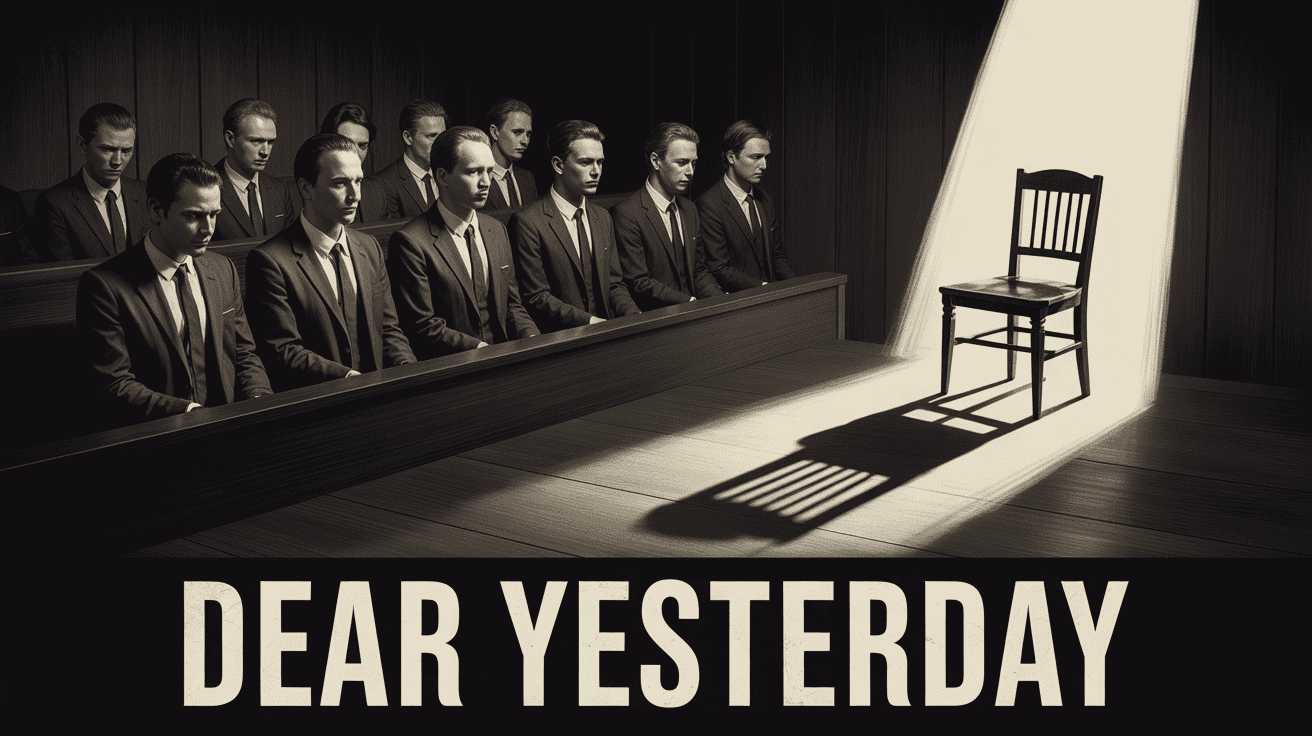
We think of silence as an absence, an empty space where words could be. But in the world of a psychological thriller, silence is never empty. It’s a living entity, heavy with unspoken truths, past mistakes, and the ghosts of choices we refuse to confront. It’s a prison we build for ourselves, brick by brick, until the walls begin to close in.
Stories that grip us, the ones that keep us awake long after the final page, are rarely about the crime itself. They’re about the silence that follows. They explore the crushing weight of a secret and the terrifying, inevitable moment when that silence finally breaks.
What is it about a buried truth that holds such power over us?
1. Silence as an Accomplice
The most profound betrayals often happen not in a moment of action, but in a moment of inaction. The decision to not speak, to not intervene, to let a lie stand—this is where guilt takes root. In a legal thriller, this silence can condemn an innocent person. In our own lives, it can condemn us to a lifetime of “what ifs.” The weight of silence comes from the knowledge that we were a witness, and by choosing to say nothing, we became an accomplice to the crime.
2. The Echo Chamber of Guilt
A secret is never truly alone. It lives in our minds, replaying the past on a constant loop. Every quiet moment becomes an opportunity for the unspoken truth to scream. This internal echo chamber amplifies guilt, turning a single past mistake into a defining characteristic of our present. Characters haunted by their past aren’t just remembering a moment; they are reliving it, endlessly, because the silence prevents them from moving forward.
3. The Inevitable Reckoning
The fundamental promise of a good thriller is that the truth, no matter how deeply buried, will always find a way to the surface. Silence is not a permanent state; it’s a pressure cooker. The longer the truth is suppressed, the more explosive its eventual revelation will be. This is the engine of suspense—not if the secret will come out, but when, and who it will destroy in the process. The reckoning is rarely clean, and often, the price of twenty years of silence is paid in a matter of days.
It is this crushing weight of silence—the choices that haunt us and the truths that hunt us—that forms the dark heart of a true psychological thriller.
If you are drawn to stories about the anatomy of a mistake and the long, deadly shadow it can cast, you are in the right place. We invite you to explore the cost of a twenty-year-old silence in Brian A. Clark’s latest release, DEAR YESTERDAY.
Discover what happens when a group of jurors is forced to confront the innocent man they condemned, and the truth proves more dangerous than the lie they all chose to live with.