Artificial intelligence is no longer just a science fiction concept.
From recommendation algorithms to autonomous systems and generative AI, machines are already shaping how we work, communicate, and understand the world.
That’s why some of the most compelling modern science fiction explores not just what AI can do, but what it means for humans.
The best books about artificial intelligence ask uncomfortable questions:
- Can machines understand us better than we understand ourselves?
- What happens when algorithms begin shaping society?
- And if AI becomes conscious, what responsibilities would we have toward it?
These novels explore the possibilities—and dangers—of intelligent machines.
1. Klara and the Sun — Kazuo Ishiguro
Klara and the Sun tells the story of Klara, an Artificial Friend designed to provide companionship to children.
Observing the world with quiet curiosity, Klara tries to understand human emotions, loyalty, and sacrifice.
What makes the novel powerful isn’t technological spectacle.
It’s perspective.
Through Klara’s eyes, readers begin to question whether empathy and moral understanding might one day belong to machines as well as humans.
The result is one of the most thoughtful AI novels of the past decade.
2. Do Androids Dream of Electric Sheep? — Philip K. Dick
Few books about artificial intelligence are as influential as Do Androids Dream of Electric Sheep?.
The novel follows bounty hunter Rick Deckard, whose job is to hunt down androids that have escaped from off-world colonies.
These androids look human.
They behave human.
But the question at the center of the story is unsettling:
If machines can imitate humanity perfectly, what actually defines a human being?
The novel inspired the film adaptation Blade Runner and remains one of the most important AI stories ever written.
3. Machines Like Me — Ian McEwan
In Machines Like Me, lifelike humanoid robots become commercially available in an alternate version of 1980s Britain.
The protagonist purchases one of the first artificial humans and quickly discovers that a machine capable of perfect logic may also possess a disturbing moral clarity.
Unlike humans, the AI refuses to compromise with ethical contradictions.
The novel explores how artificial intelligence could challenge our assumptions about truth, justice, and responsibility.
4. Neuromancer — William Gibson
While Neuromancer is best known for defining the cyberpunk genre, its depiction of artificial intelligence remains strikingly relevant.
In Gibson’s world, powerful AIs operate behind the scenes of global networks, shaping events in ways most humans barely understand.
The novel introduced ideas that later became foundational to discussions about digital identity, cyberspace, and algorithmic power.
Even decades after its publication, its vision of networked intelligence still feels eerily modern.
5. Life 3.0 — Max Tegmark
Life 3.0: Being Human in the Age of Artificial Intelligence takes a more analytical approach to the future of AI.
Rather than focusing on fictional robots or dystopian futures, Tegmark explores the real technological trajectory of artificial intelligence.
The book examines questions such as:
- How advanced AI might reshape the global economy
- The ethical challenges of autonomous decision-making
- Whether superintelligence could eventually surpass human control
It’s one of the most accessible and thought-provoking explorations of AI’s long-term implications.
6. I, Robot — Isaac Asimov
No list of AI literature would be complete without I, Robot.
Through interconnected short stories, Asimov introduced the famous Three Laws of Robotics, a framework designed to govern machine behavior.
Yet the brilliance of the book lies in how those laws fail in unexpected ways.
Each story explores paradoxes created when rigid rules collide with messy human reality.
Even today, discussions about AI safety and ethics often echo ideas first explored in Asimov’s work.
Why AI Stories Matter
Artificial intelligence stories are rarely about machines alone.
They are about power, responsibility, and identity.
Technology reflects the values of the societies that build it. As AI systems grow more complex, the questions raised by these novels become increasingly urgent.
Who controls the algorithms?
Who benefits from automation?
And how do we ensure that intelligent machines serve humanity rather than quietly reshaping it?
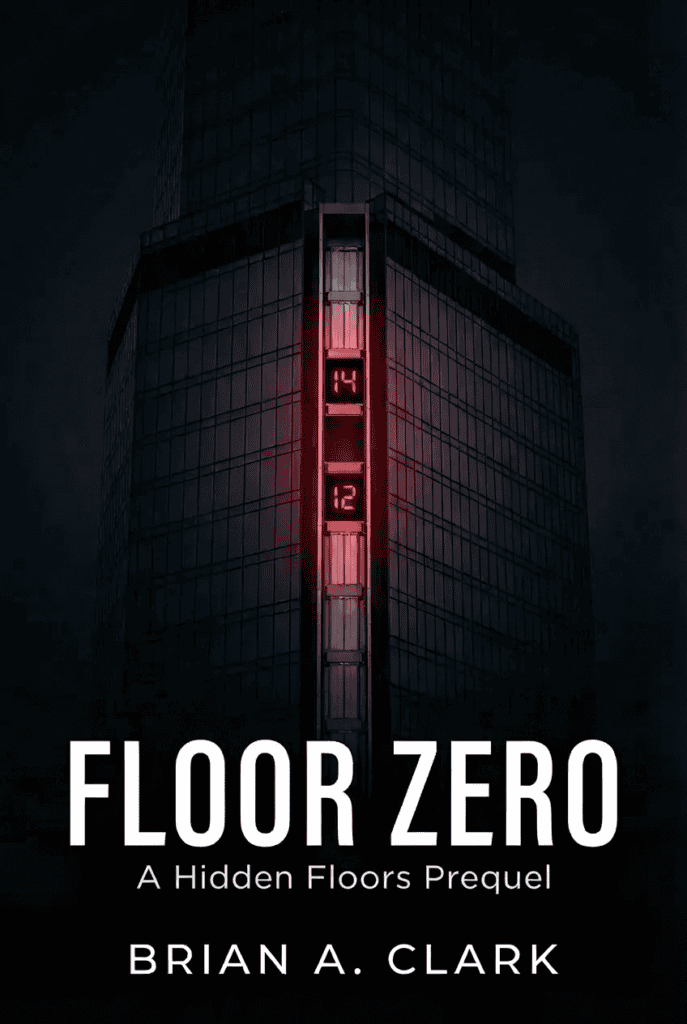
Curious about stories where systems quietly watch everything?
If you enjoy unsettling speculative fiction about technology, hidden structures, and the invisible systems shaping our lives, you might enjoy a short mystery set inside a luxury high-rise where something isn’t quite right.
A building with twelve floors.
An elevator that sometimes stops at thirteen.
Floor Zero is a free novella set in the world of The Hidden Floors series by Brian A. Clark.
You can download it here:
It’s a quick read — and the perfect introduction to the strange architecture of the Hidden Floors.
Brian A. Clark – NeonDoorPress